Inbound Marketing
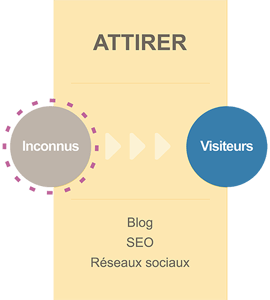
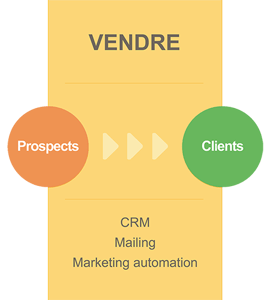
- Attract Visitors
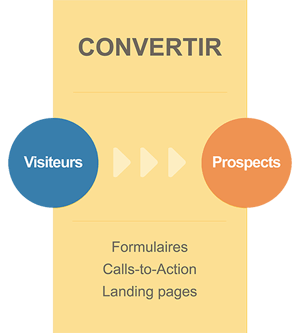
- Generate leads
- Turn them into Customers
Grow your business by adopting customer-centric content marketing across all your digital channels.
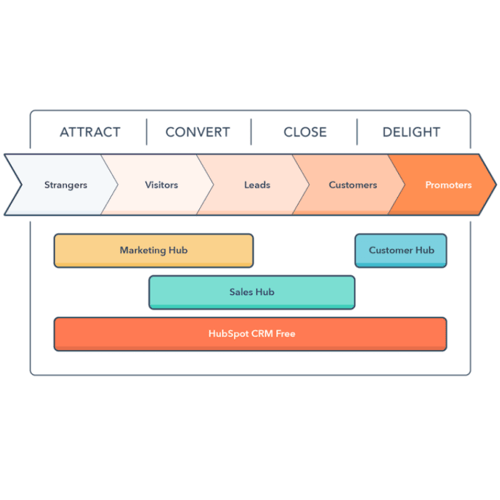
Our Inbound Marketing Methodology
Strategy & Plan
Technology
Marketing Ops
Our experts support your teams in deploying Inbound marketing strategy, tactics and actions to develop your visibility, generate more leads and engage with your prospects.
Why STRATENET for your Inbound Marketing campaigns?
Attracting visitors with Inbound Marketing
Content Strategy
Development of a coherent content strategy aligned with your customers' needs to attract, engage and convert your visitors at every stage of their journey.
Optimized blog posts
Writing SEO-optimized blog posts that answer your prospects' key questions, improving your visibility on search engines.
Social Media distribution
Distribute your articles on your social channels and create engaging posts on social platforms to generate traffic and strengthen your online presence.
SEO optimization
Search engine optimization of your website and blog posts to attract qualified and sustainable organic traffic.
SEA / Google Ads
Dependingon the strategy pursued,implementation of targeted advertising campaigns on Google Ads to immediately capture prospects' attention.
Convert your visitors into leads with Inbound Marketing
Conversion Strategy
Optimize every step of the customer journey to turn your visitors into buyers with a targeted, effective conversion strategy.
Optimized Landing Pages
Design optimized landing pages with a single objective: convert visitors into leads with targeted offers.
Content Offer
Offer eBooks, whitepapers, Quizzes and Surveys to provide your prospects with valuable information, reinforce their trust in your expertise and capture their data.
Testimonials + case studies
Share success stories and customer testimonials to build trust and encourage visitors to convert into leads.
Intelligent pop-ups
Use of non-intrusive pop-ups triggered by visitor behavior to encourage them to leave their information.
Intelligent Call-to-Action
Use of highly visible, intelligent call-to-action buttons and links that adapt to your visitors' behavior, prompting them to sign up or request more information.
Turning Leads into Customers with Inbound Marketing
Personalized email nurturing
Send segmented, personalized email campaigns to educate, engage and guide leads through the buying journey.
Targeted content by funnel stage
Creation of specific content for each stage of the customer journey, providing the information needed to lead them to a purchasing decision.
Marketing automation
Set up automated sequences that send targeted messages based on lead behavior, gradually guiding them towards purchase.
Lead analysis and scoring
Use lead scoring to identify the most qualified leads and give them priority attention with specific actions.
Special offers
Propose special offers, free demos, or limited offers and exclusive discounts to leads to create a sense of urgency and encourage purchase.
Advanced webinars
Organize in-depth webinars on the benefits and use of your products/services, encouraging leads to buy.
Your questions about Inbound Marketing
What monthly budget should I invest in an Inbound Marketing strategy?
Average budget :
Between €3,000 and €8,000 per month for an SME.
This amount is not an expense, but an investment structured in three thirds: Technology (HubSpot-type CRM licenses), Production (writing expert articles, white papers, videos) and Distribution (targeted advertising to prime the pump).
A budget below this threshold risks diluting efforts and slowing lead generation, making ROI difficult to achieve before 12 to 1
What is Inbound Marketing?
Inbound marketing is a strategy that aims to attract potential customers by offering them relevant, valuable content, rather than intrusive solicitation. The aim is to guide prospects through a buying journey, from first contact to conversion into a customer.
How can Inbound Marketing help my business?
Inbound Marketing helps you attract qualified visitors, convert them into leads, and then turn them into loyal customers. By providing relevant content at every stage of the buying journey, you increase your credibility and encourage prospects to choose your products or services.
How long does it take to see results with Inbound Marketing?
The first qualified results generally appear between the 6th and 9th month.
This is the incompressible time it takes for the semantic indexing (SEO) of your content to take effect and for the nurturing workflows to engage your cold prospects.
Unlike Outbound or SEA, which stop as soon as the budget is cut, Inbound capitalizes on time: the more your content library grows, the more your Customer Acquisition Cost (CAC) drops mechanically, creating a compound effect after the first year.
Can I do Inbound without HubSpot Marketing Hub Pro?
Yes, but it's technically complex and often more costly in terms of human time.
It's possible to manually connect disparate tools (WordPress for blogging, Mailchimp for emailing, Zapier for automation, Google Analytics for data). However, inbound marketing relies on the centralization of customer data (Single Source of Truth).
Using an all-in-one ecosystem like HubSpot enables sales and marketing teams to be natively aligned, lead scoring to be automated, and the ROI of each action to be proven, with no loss of data between tools.
What are the key elements of a successful Inbound Marketing strategy?
A successful Inbound Marketing strategy relies on the creation of quality content, SEO optimization, social network management, lead generation via forms and landing pages, and lead nurturing via targeted email campaigns.
How to measure the effectiveness of Inbound Marketing?
The effectiveness of inbound marketing is measured by key indicators such as website traffic, lead conversion rate, cost per lead, return on investment (ROI) and, above all, the number of new customers generated. Analysis tools and dashboards are essential for tracking this performance and adjusting strategy accordingly. That's why we work with HubSpot's Marketing Hub.
Why Stratenet for my Inbound Marketing campaigns?
How does Inbound Marketing generate better leads than prospecting?
Inbound reverses the balance of power:
the prospect is the seeker, not the hunted. By the time a lead arrives via Inbound, it has already consumed several educational contents (Lead Nurturing) and validated its own level of maturity.
Psychologically, he's the one who chose you, which drastically reduces sales objections at the first meeting.
We move from an Outbound logic to a Permission logic, which mechanically increases the sales team's Closing Rate.
What's the difference between classic Inbound Marketing and Loop Marketing?
Inbound marketing is linear (funnel), while loop marketing is circular and adaptive.
Classic Inbound focuses on acquiring new leads. Loop Marketing (or Flywheel) integrates customer loyalty and referral as a growth driver.
In a context where AI (ChatGPT, Search Generative Experience) is changing the way people search for information, Loop Marketing no longer aims simply to attract traffic, but to create a strong semantic authority that makes your brand the only logical answer in the eyes of users and algorithms alike.
Treat yourself to 30 Minutes of Inbound Advice
But is it right for your business?